
Case Study: Dual-Temperature Heating Deployment for Residential Development
Project Location: Gateshead
Application: Temporary Heating for Residential Apartments
Installation Window: 26 February 2026
Project Overview
A residential apartment development in Gateshead experienced a severe heating outage after multiple heat pump failures left the building without heating during the winter months. A rapid temporary solution was needed to restore comfort, support resident wellbeing, and ensure the building remained protected during cold weather.
A temporary heating strategy was deployed that could operate within strict electrical limitations while maximising reliability and performance.
The Challenge
• Multiple heat pumps serving the building had failed beyond repair.
• Residents had been without heating for an extended period, creating a serious welfare concern.
• The site had only a 125 amp electrical supply available, limiting replacement options.
• The solution needed to be deployed quickly, operate quietly, and minimise disruption in an occupied setting.
Customer Requirements
• Reinstate heating across the entire apartment block using a temporary heat pump solution.
• Maximise heating output within the constrained electrical supply.
• Improve reliability and reduce noise levels compared to the failed systems.
• Support future planning for a long term, permanent replacement.
The Solution
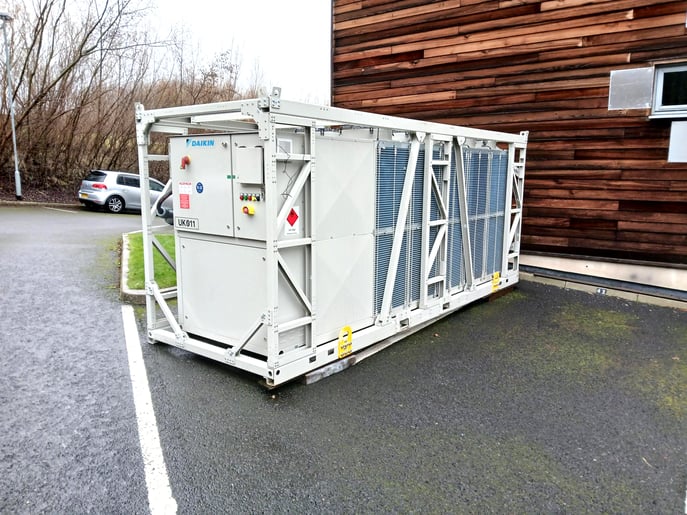
A single EWYT 205 air source heat pump was supplied and installed to deliver temporary heating to the whole building. This included all required hoses, fittings, and power cabling.
Instead of replacing each failed unit individually, the design consolidated six smaller heat pumps into one centralised temporary system. This simplified installation, reduced potential failure points, and ensured optimal use of the available electrical capacity.
Why This Solution Was Chosen
• The EWYT 205 delivered the maximum possible heating output within the restricted 125 amp supply.
• Using a single larger unit improved system resilience and reduced operational risk.
• A centralised temporary plant significantly simplified monitoring and maintenance.
• Low noise performance made the system suitable for a fully occupied residential environment.
Installation Details
• Building type: Residential apartments
• Location: Gateshead
• Installation date: 26 February 2026
• Application: Temporary heating following multiple heat pump failures
The installation was completed efficiently to restore heating as quickly as possible and minimise disruption to occupants.
Performance and Benefits
• Improved efficiency: The modern heat pump offered better performance than the previous units.
• Enhanced reliability: Fewer components meant fewer potential failure points.
• Reduced noise: Quiet operation helped maintain a comfortable living environment.
• Simplified system layout: A single-unit solution made the temporary setup easier to manage and monitor.
Future Outlook
The success of this temporary installation has initiated discussions about a permanent high efficiency heat pump system tailored to the building’s long term needs.
A maintenance package may also be introduced once a permanent solution is selected.
Conclusion
This project demonstrates how a well designed temporary HVAC solution can restore essential services quickly while providing a pathway toward long term system improvement. Fast deployment, intelligent system design, and efficient equipment selection ensured reliable heating for residents during a critical period.